Deck and Traffic Coatings in Los Angeles, CA
Waterproof deck systems for balconies, walkways and podium decks, and traffic bearing membranes for parking structures, ramps and plaza decks.
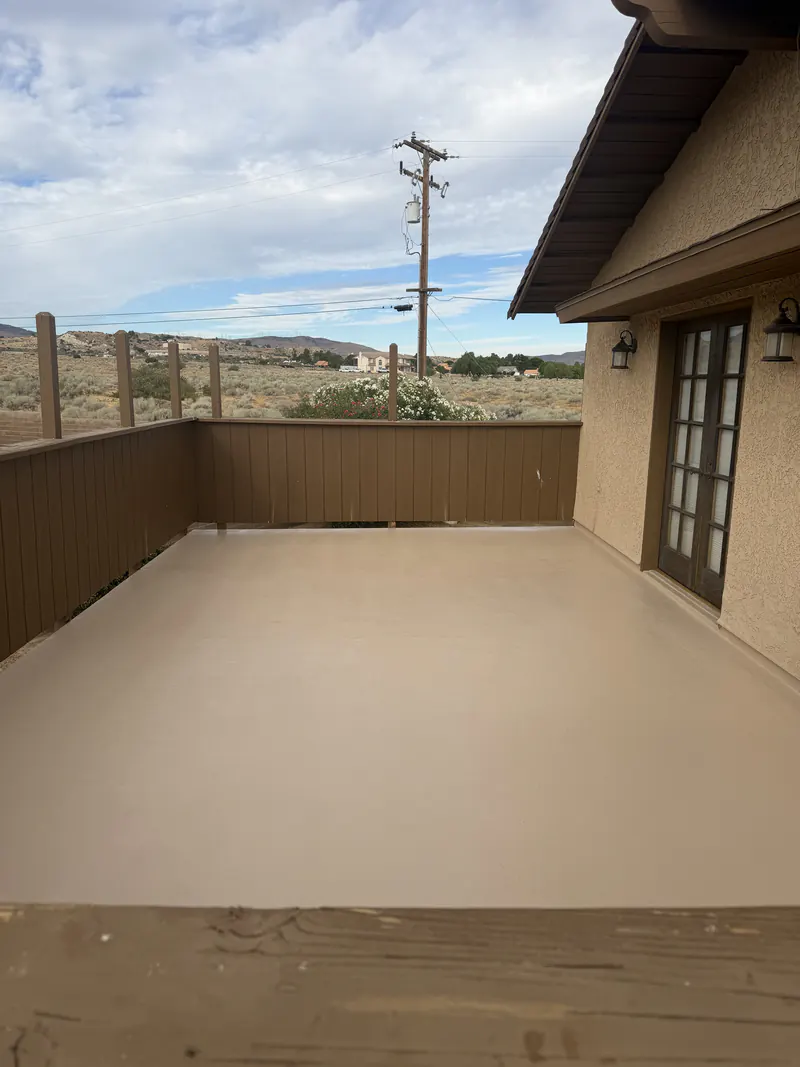
A deck coating is not paint, it is a waterproofing system with a wearing surface on top, and the order matters. The substrate, whether plywood or concrete, gets checked and tested for moisture first, because coating over a wet deck is the single most common reason these systems fail early. Cracks and joints get prepped, then a primer, a waterproof base coat, reinforcing fabric at seams and transitions, and finally a textured topcoat that people actually walk on.
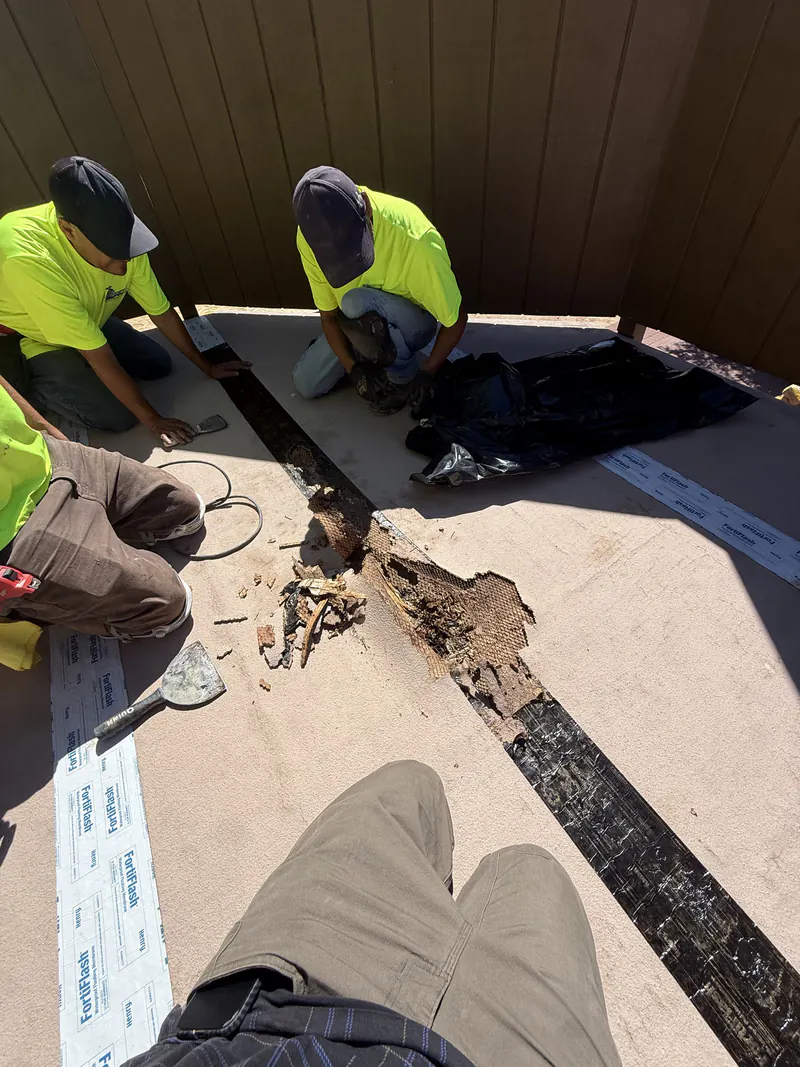
When this is rushed, the failures show up in specific places. No slope to a drain means water ponds and eventually finds a seam. Missing flashing at a door threshold lets water track behind the coating and into the framing below, so a homeowner sees a soft spot in the decking or a stain on the ceiling of the room underneath. A topcoat that is too thin wears through in high traffic paths, like the line from the door to the stairs, exposing the membrane underneath years before the rest of the deck shows wear.
In Los Angeles the sun is the other factor. UV exposure is intense and constant, so the topcoat needs to be UV stable or it chalks and thins out fast. Wide swings between hot days and cool nights also put stress on joints and transitions, which is why reinforcing fabric at those points is not optional.
These systems carry real vehicle loads, so the build up is heavier than a residential deck coating. Concrete is prepped and cracked areas repaired, drains and penetrations get detailed first since they are the weak points, then a reinforced base membrane, an intermediate reinforcing coat, a slip resistant aggregate broadcast, and a UV stable topcoat that takes tire wear and turning traffic without breaking down.
The most common failure is a system that was never built up thick enough for the loads it sees, so it wears through in drive lanes and at turning radii within a short time instead of holding up over the long term. Joints that are not detailed to allow movement crack right along the joint line beneath them, since the membrane cannot stretch across a moving crack it was never designed to bridge. Drains that are not properly flashed let water get under the membrane, and once that happens the coating delaminates from the inside out, which shows up as rust staining reaching the rebar below.
Parking structures in Los Angeles deal with constant UV exposure and seismic movement that is more frequent and more significant than in most parts of the country, so joints in these systems need to be sized for real building movement, not just thermal expansion.
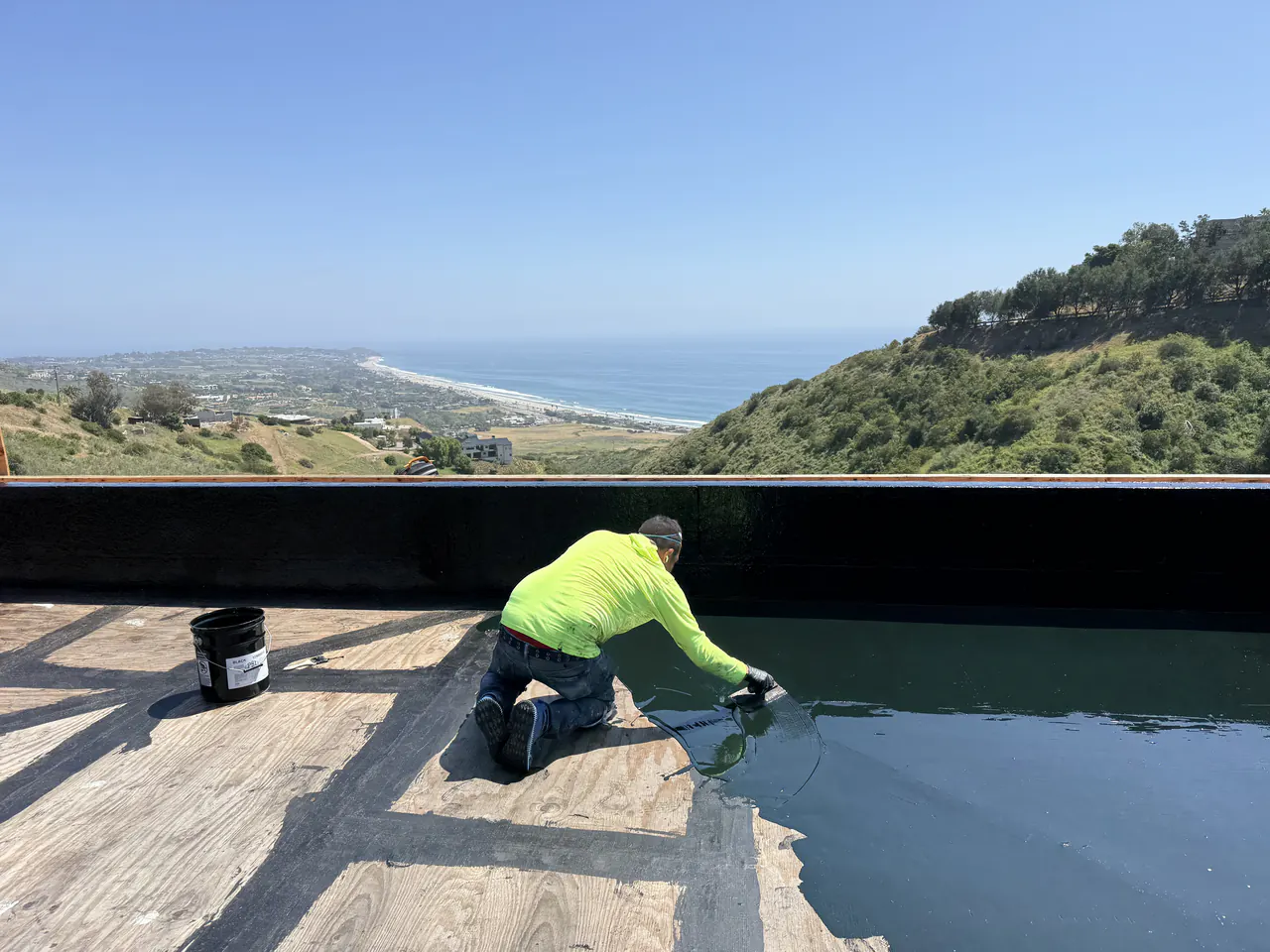
Deck/Traffic Coating in progress
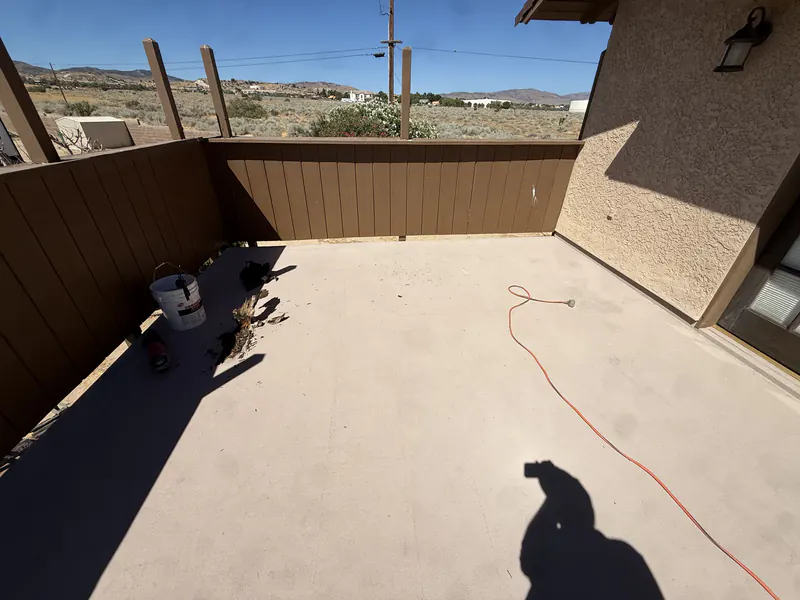
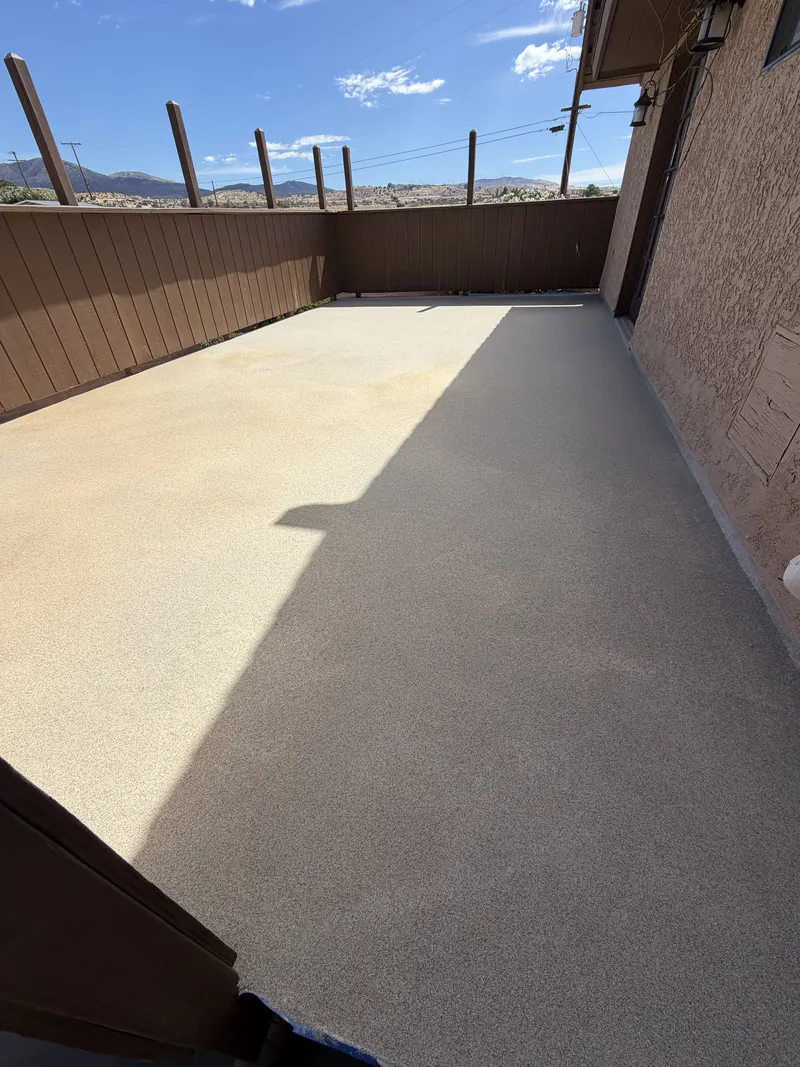
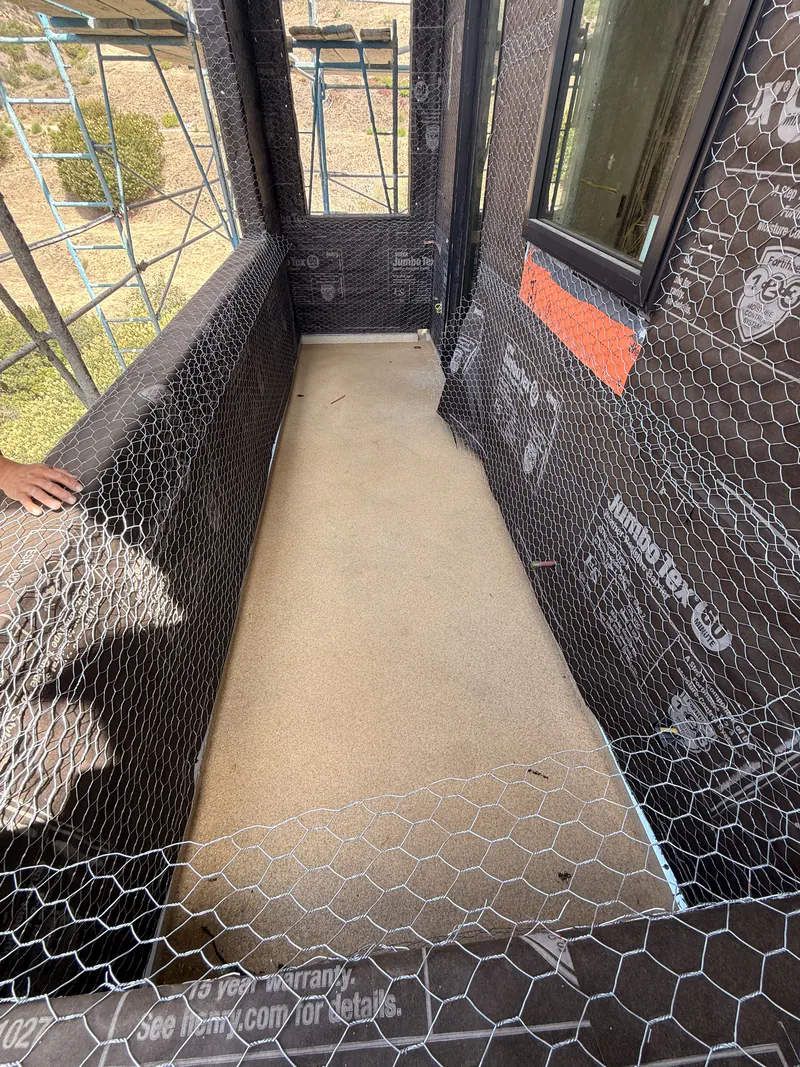
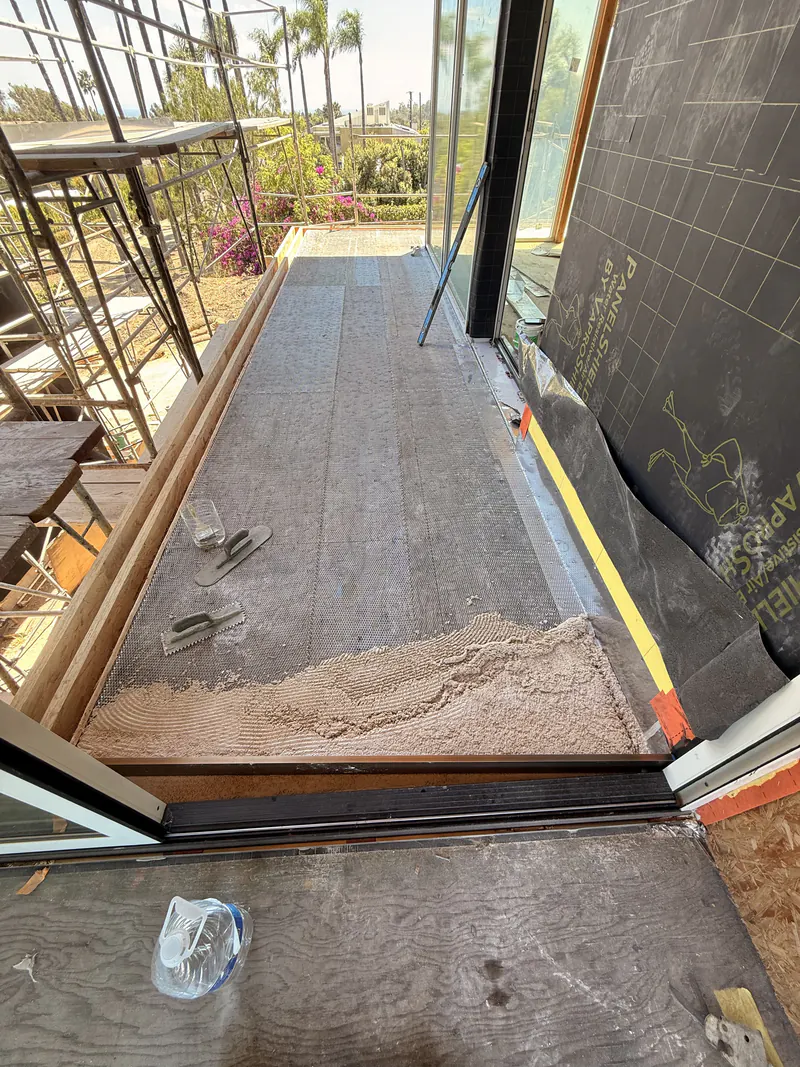
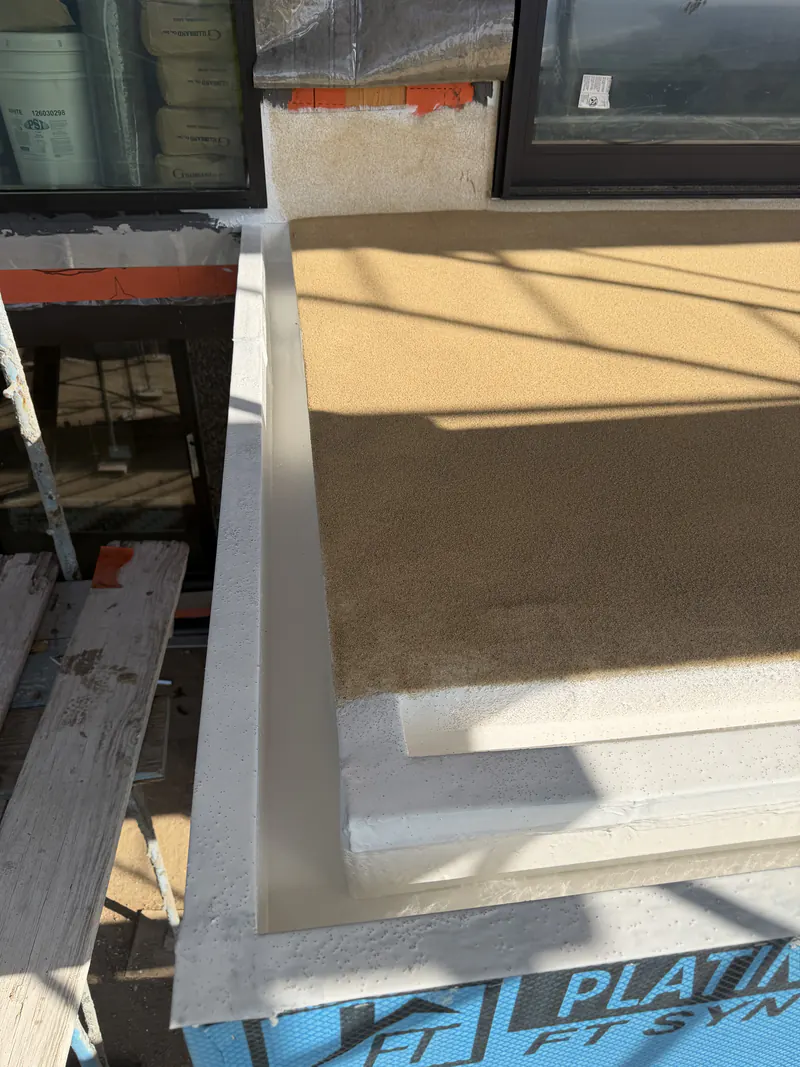
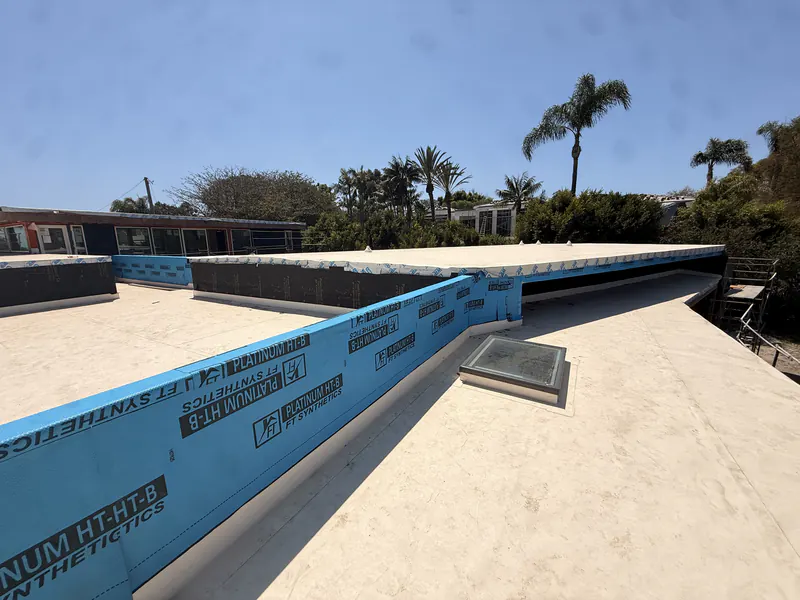
How it runs
Inspect substrate
Plywood or concrete gets checked for moisture and soundness before anything is applied.
Prep and repair
Cracks, gaps and damaged areas are repaired so the coating has a solid base.
Detail drains and joints
These are the points most likely to fail, so they get flashed and reinforced first.
Prime
A primer coat is applied to help the waterproof membrane bond properly.
Base coat and reinforcing
The waterproof base coat goes on with fabric reinforcement at seams, corners and transitions.
Reinforcing coat
An intermediate coat adds thickness and durability where tires turn and brake most.
Aggregate broadcast
Aggregate is broadcast into the surface for slip resistance under wet tires.
Wearing coat
A textured topcoat is applied for slip resistance and daily foot traffic.
Other things we install
Tell us about the project.
Send the property, the address and what you are seeing. If it is urgent, the phone is quicker than the form.